
PadSplit: Rooms for rent
PadSplitHouse & Home
4.6830.00 Reviews
- Version
- 2.21.0
- Installs
- 100.00K
- Age Rating
- Everyone
Screenshots
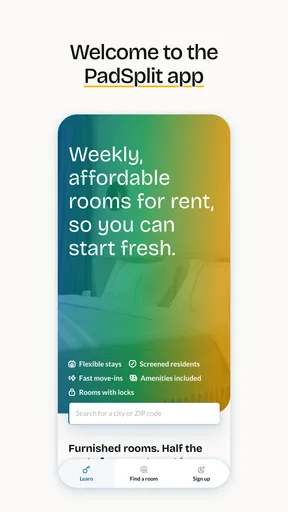
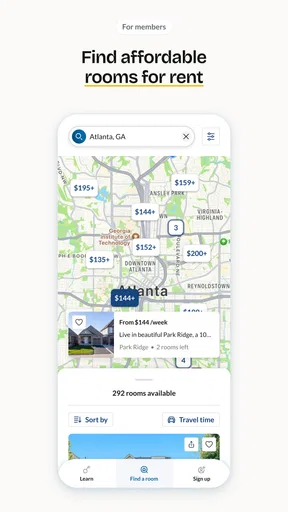
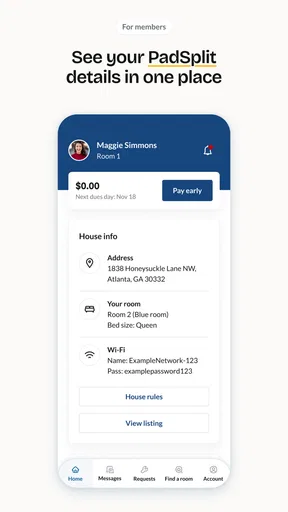
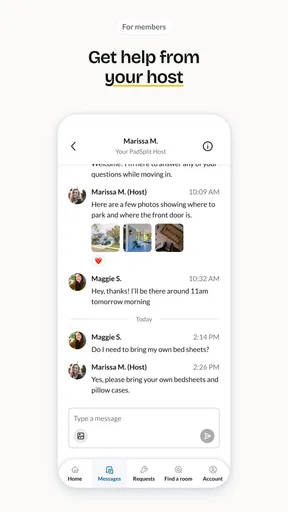
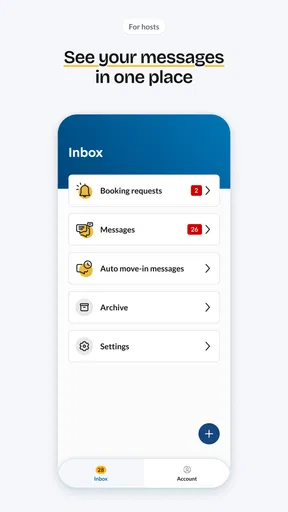
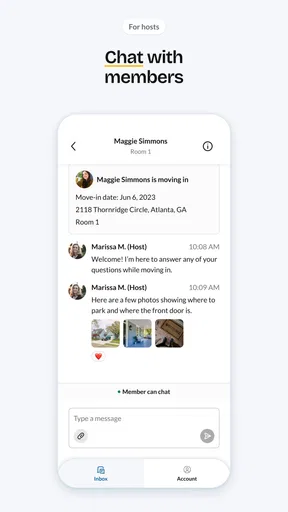
Our Review of PadSplit: Rooms for rent
 Analysis by Appyee
Finding a room is usually more complicated than finding a whole apartment. The search is narrower, the budget is tighter, and the decision often depends on practical details such as location, household routines, and whether the arrangement feels trustworthy. I tested PadSplit: Rooms for rent with that reality in mind, and I found an app aimed at people who want a more budget-conscious path into housing rather than a traditional full-home rental search.
PadSplit is a free House & Home app from PadSplit. It is designed around shared living and room rentals, so its usefulness depends heavily on what kind of housing you need. If you are looking for an individual room and are open to living in a shared property, it can make the search feel more focused than browsing broad real-estate platforms. If you need an entire apartment, a private home, or a highly customizable lease arrangement, the experience is less likely to match your priorities.
How PadSplit fits into everyday shared housing
The clearest way to understand the app is to imagine a realistic weeknight situation. You have a job, a limited housing budget, and little time to compare dozens of unrelated listings. Instead of searching only for apartments that require you to cover the full rent, you use PadSplit to explore rooms intended for shared housing. That changes the starting point: you are not simply hunting for square footage, but considering whether a room within a shared home fits your routine.
That focus is the app’s strongest idea. A general property marketplace can be useful, but it often mixes entire homes, luxury units, short-term stays, and room listings into one large search. PadSplit is more relevant when your main question is, “Can I find a room that gives me a practical place to live without taking on the cost of a whole property?” In my experience, that narrower purpose makes the service easier to evaluate at the beginning of a search.
It is also important to approach the app as a starting point for a housing decision, not as a substitute for personal judgment. A room can look suitable on a screen and still be a poor match once you consider commute time, noise, privacy, kitchen use, visitors, or the general feel of the household. I would use PadSplit to identify realistic options, then slow down before committing to anything.
The service has attracted a sizable audience, with more than one hundred thousand installs and an average rating of 4.5 from roughly five thousand ratings. Those figures suggest that the app has reached people who find its shared-housing focus useful, but they should not be treated as a guarantee that every listing or living arrangement will suit you. Housing is personal, and a good experience depends on the specific room and the expectations of everyone sharing the property.
What the first search should accomplish
My advice is to decide your non-negotiables before browsing deeply. For example, you might need a manageable commute, a private bedroom, access to a kitchen, or a household environment that works with your schedule. Writing those down prevents the low price of a room from becoming the only factor guiding you.
A useful first pass is to separate “possible” from “comfortable.” A room may appear financially possible but still be uncomfortable if the location adds a long daily journey or if the shared areas do not suit your habits. PadSplit is most helpful when you use it to build a shortlist, not when you treat the first acceptable-looking option as the final answer.
One less obvious benefit of a room-focused service is that it can help you rethink the amount of space you actually use. Someone who spends most of the day at work may value a clean, predictable bedroom and a reasonable route home more than a large living room. On the other hand, someone who works remotely, hosts relatives, or needs quiet personal space may discover that shared housing creates compromises that a normal apartment search would avoid.
Setting boundaries before sharing a device or account
PadSplit can be relevant in a household where more than one person helps with the housing search, but I would keep account responsibility clear. If one person is looking for a room, that person should remain the main decision-maker and should review the details personally. A shared phone or tablet can make browsing convenient, yet it can also blur which saved options, messages, or decisions belong to whom.
For couples, relatives, or friends helping someone relocate, a simple workflow works best: one person searches, the prospective resident checks the details, and both discuss the shortlist outside the app. That avoids treating a shared browsing session as shared consent. The app can support coordination, but it should not replace a direct conversation about budget, location, privacy, and the responsibilities of living with others.
I would also avoid assuming that a device’s general age setting tells you whether a listing is suitable for a particular resident. PadSplit carries an Everyone content rating, which makes the app broadly accessible from an age-classification perspective, but housing decisions still require adult judgment and careful verification. A young person, an older relative, or anyone moving into a new area may need extra help interpreting the practical implications of shared living.
Another useful boundary is financial. If several people are involved in the search, decide who is allowed to discuss costs and who is authorized to make a commitment. A roommate helping with research should not accidentally become the person who confirms an arrangement simply because they were holding the phone. Keeping that line clear is especially important when the search concerns someone who is moving under pressure.
Coordinating a room search without creating confusion
Shared housing works better when expectations are discussed early. When I review a room option, I think beyond the bedroom itself: How might the resident get to work? Will they need to share cooking space? Are they comfortable with household routines that may differ from their own? Does the arrangement provide the kind of privacy they actually need?
PadSplit’s focused purpose makes it easier to bring those questions into the conversation because the search is already centered on rooms and shared properties. Still, the app cannot make personal compatibility decisions for you. Two people can have different definitions of “quiet,” “clean,” or “occasional guest,” and those differences may matter more than a polished listing presentation.
For a family helping a relative, I would create a short checklist and use the same checklist for every candidate. Include the room’s practical appeal, the travel route, what shared areas matter, and which questions must be answered before moving forward. This prevents the search from becoming an emotional reaction to whichever option appears first.
For friends searching together, the main trade-off is independence. A shared search can provide a second opinion, but too many people can make the process slow and contradictory. I would give one person responsibility for organizing the shortlist while allowing the future resident to make the final choice. That arrangement keeps cooperation useful without turning a personal housing decision into a group vote.
A particularly practical tip is to compare rooms by total daily impact rather than rent alone. Add the likely travel burden, the time needed to use shared facilities, and the amount of personal space you realistically require. A cheaper room that makes work and rest harder may not be the bargain it first appears to be. PadSplit makes the room search more targeted, but you still need to perform that broader comparison yourself.
Trust, age, and the limits of a housing app
Because PadSplit deals with where people live, trust matters more here than it does in many ordinary lifestyle apps. I would treat every listing as an invitation to investigate, not as a complete picture of the household. Before making a decision, a prospective resident should be comfortable asking direct questions about the room, the shared spaces, the people living there, and the practical terms of the arrangement.
The app’s Everyone rating is useful context for accessibility, but it should not be confused with a safety judgment about individual housing choices. Parents, guardians, and relatives helping a younger or inexperienced renter should stay involved in the parts that matter most: identity, location, finances, transportation, and whether the living arrangement is appropriate for that person’s circumstances.
This is also where account boundaries become important. I would not hand over control of a housing account casually, even when a family member is helping. A helper can review options with the resident, but the resident should know which account is being used and what action is being taken. Shared-device convenience is valuable only when everyone understands who owns the search and who is responsible for the outcome.
PadSplit is not the right tool for someone who expects the app itself to remove all uncertainty. It can narrow the search, but it cannot know whether you will sleep well in a particular home, feel comfortable using the kitchen, or get along with the household. Those questions require communication and, where appropriate, an in-person look at the property before making a commitment.
I also would not recommend relying on a room-search app alone when the situation is urgent or unusually complex. Someone with accessibility requirements, a need for a fully private home, or a strict preference for a conventional landlord-tenant arrangement may be better served by combining several housing resources and speaking directly with relevant professionals. PadSplit can remain part of that search, but it should not be the only lens.
Technical access and day-to-day usability
The app is free to install, and it supports devices running Android 8.0 or later. Its current version is 2.10.0, which indicates that the product has continued receiving updates since its release on February 24, 2021. For most people with a reasonably recent Android phone, access should be straightforward, although the quality of the housing search will still depend more on the available options in the areas you are considering than on the phone itself.
I like that the app has a clear purpose instead of trying to become a general-purpose property portal. That focus reduces the mental effort involved in figuring out whether a result is even relevant. The trade-off is that a narrower service may not offer the breadth you expect from a large real-estate marketplace, especially if you want to compare room rentals with entire apartments, private houses, or other housing formats in one place.
The app’s popularity is reassuring enough to justify trying it, but the rating should be read alongside your own priorities. A strong overall score can reflect a good experience with the search process while saying little about whether a particular room matches your commute or privacy needs. I would judge the app on how efficiently it helps me reach a sensible shortlist, then judge each housing option independently.
It is also worth remembering that convenience can encourage hurried decisions. A simple mobile search makes it easy to save or discuss a room while distracted, but housing deserves a slower review. I would take notes outside the app, compare candidates at a consistent level of detail, and avoid letting a quick browsing session become an unexamined commitment.
Where it beats ordinary alternatives, and where it does not
Compared with a broad apartment marketplace, PadSplit has a more deliberate focus on rooms and shared living. That is an advantage when a full apartment is outside your budget or when you want to search specifically for a room rather than filter through unrelated property types. It can also be less overwhelming for someone who already knows that shared housing is the intended direction.
A traditional rental search may be better for a household that needs a private unit, control over every room, or a conventional lease comparison. A general classifieds service may offer a wider variety of arrangements, but it can require more effort to separate useful room options from unsuitable or poorly described listings. PadSplit sits between those extremes: more focused than a general marketplace, but not a complete replacement for every type of housing search.
The most important trade-off is choice versus relevance. A broad service may show more listings, while PadSplit may save time by emphasizing the kind of housing its audience is already considering. If your priority is maximum inventory across many property types, use a broader alternative as well. If your priority is finding a budget-conscious room without starting with full-home rentals, PadSplit is the more natural first stop.
I would also choose another approach when privacy is non-negotiable. Shared housing can be financially practical, but it involves compromises that no search interface can eliminate. Someone who needs a quiet home office, has a highly specific accessibility setup, or simply dislikes shared kitchens may spend less time and frustration searching for a private rental instead.
My household verdict after using it
PadSplit: Rooms for rent makes the most sense for people who are genuinely open to shared housing and want a more targeted way to explore room-based options. I appreciate its practical focus, its free access, and the way it encourages a different starting point from the usual “find an entire apartment” search. For a worker, student, relocating adult, or budget-conscious renter, that focus can turn an unfocused housing hunt into a manageable shortlist.
My recommendation comes with a firm condition: use the app to organize your search, not to outsource your judgment. Check whether the location fits your daily life, discuss household expectations, keep account responsibility clear, and involve a trusted adult when the resident needs support. Those steps matter particularly when the app is used on a shared device or by several people coordinating one move.
I would skip it as a primary option if you need a private home, a highly specialized living arrangement, or a broad comparison across every rental category. In those cases, a conventional real-estate platform or a more personal housing search may be a better match. PadSplit is strongest when its central premise already fits your needs.
For the right renter, though, it offers a useful change in perspective: a home search does not always have to begin with an entire apartment. If a room in a shared property can meet your budget and daily requirements, this app is worth adding to your search routine. Just remember that the best result is not the room that looks easiest to choose; it is the one whose practical details and household expectations still make sense after you have asked the difficult questions.
Privacy and Permissions
See what permissions an app requests and how it handles your data.
- Location
- approximate location (network-based), precise location (GPS and network-based)
- Photos/Media/Files
- read the contents of your USB storage, modify or delete the contents of your USB storage
- Storage
- read the contents of your USB storage, modify or delete the contents of your USB storage
- Camera
- take pictures and videos
- Microphone
- record audio
- Wi-Fi connection information
- view Wi-Fi connections
- Other
- view network connections, change network connectivity, full network access, control Near Field Communication, run at startup, control vibration, prevent device from sleeping
Verdict
Strengths of PadSplit: Rooms for rent
- Flexible room rentals can be more affordable than leasing an entire apartment.
- Utilities and essential household costs may be bundled into one payment.
- Listings can help renters find furnished rooms with shared amenities.
- The app makes it easy to browse available rooms by location and price.
- Useful option for people seeking housing without a long traditional lease.
Limitations of PadSplit: Rooms for rent
- Availability varies greatly by city, neighborhood, and current vacancy levels.
- Shared kitchens and bathrooms may offer less privacy than a private apartment.
- Additional fees or deposit requirements can increase the total move-in cost.
- Room quality and house rules may differ between individual PadSplit homes.
- Renters may have limited control over roommates and shared-living conditions.
Similar Picks in This Category
View All
Universal TV Remote Control
CodeMatics Media Solutions3.9

AlfredCamera Home Security app
Alfred Systems Inc.4.7

Planner 5D: AI Home Design
Planner 5D4.5

Universal Tv Remote-Cast to TV
One Music Player4.1

Zillow: Homes for Sale & Rent
Zillow Group4.8

99acres Buy/Rent/Sell Property
infoedge.com4.3
Frequently Asked Questions
What is PadSplit: Rooms for rent?
PadSplit is a housing platform designed to help people find furnished rooms for rent, often with shared kitchens, bathrooms, and common areas. The app focuses on flexible, room-by-room housing rather than traditional full-apartment leases. Listings may include utilities and other services in the weekly price, but the exact arrangement, amenities, rules, and availability depend on the property and local market.
How does renting a room through PadSplit work?
After creating an account, you can browse available rooms by location, price, amenities, and move-in requirements. When you find a suitable listing, you review the property details, submit the required information, and follow PadSplit’s application or approval process. If accepted, the app provides instructions for payment, move-in, and communication with the property or community management.
How much does PadSplit cost, and what is included?
The total cost varies according to the location, room type, property, and available amenities. Many listings use a weekly payment structure and may bundle utilities such as electricity, water, or internet, which can make budgeting easier than paying several separate bills. However, deposits, application fees, service charges, late fees, or other requirements may apply, so check the complete price breakdown before committing.
What documents or requirements are needed to apply?
Requirements can differ depending on the property and local regulations, but applicants should generally be prepared to provide personal identification, contact details, income or employment information, and permission for any required screening. Some listings may have additional eligibility rules, occupancy limits, or payment conditions. Carefully review the application instructions in the app and make sure all information is accurate before submitting.
Is PadSplit safe and suitable for everyone?
PadSplit can be useful for people seeking a more affordable and flexible alternative to renting an entire apartment, especially those who need a furnished room or want predictable recurring payments. Nevertheless, shared housing requires consideration of privacy, noise, cleanliness, house rules, and compatibility with other residents. Read reviews and listing information, verify the terms, inspect the room when possible, and contact support if a listing or payment request seems suspicious.
